Everyone in this city is looking for something
Six strangers lead the season one after another, ten days each; the last leads nine. Each one’s story is set before the season starts. How each day goes is not: the market’s mood decides whether the city opens or closes, whether help arrives, whether the mask cracks.
Each has their own sounds in the music. Every day they lead is played on the instruments Dav chose for them.
Pictures are studio previews from the Season 4 trailer, made before the season began.
The Newcomer
Days 1–10, tableaus #211–220
Looking for a place to belong. The mood decides whether the city opens or closes.
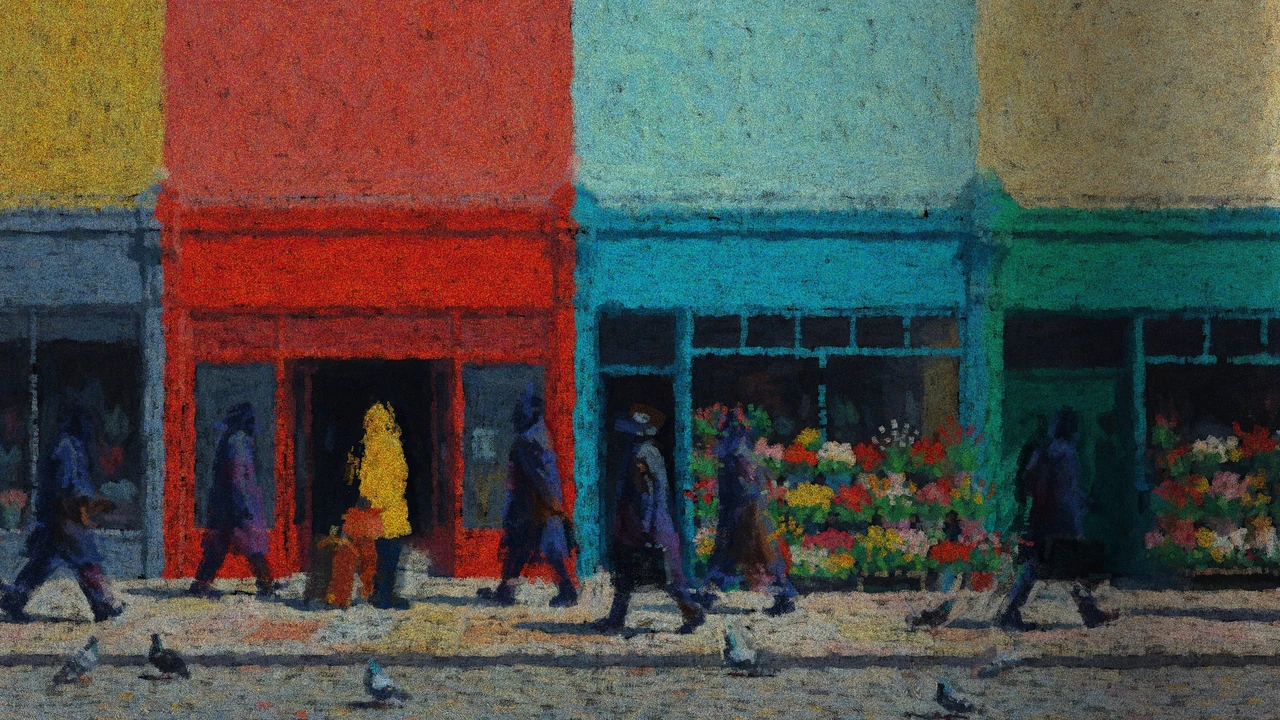
Someone who has just arrived in the city with a suitcase and a second bag, on the season’s first morning. Where they came from is never said. Curious and open. Looks up at every building. A little clumsy, and laughs at it. Builds a life out of tiny repeated things: the same window seat, a plant on the sill. Lonely underneath. The fear is a table for one.
You find them by the yellow raincoat, hood up, a suitcase in the near hand: the only colour they wear. Their days are seen at eye level from across the street, the pavement along the bottom and the facades side by side like a stage set, tender and uncertain. On a rising day someone holds a door and remembers their name; on a falling day it is closed doors, a table for one and rain. The Newcomer appears in the days of the Night Worker, the Caretaker, the Performer, the Runaway and the Young One.
The Night Worker
Days 11–20, tableaus #221–230
Looking for daylight. The mood decides whether anyone is awake with him.
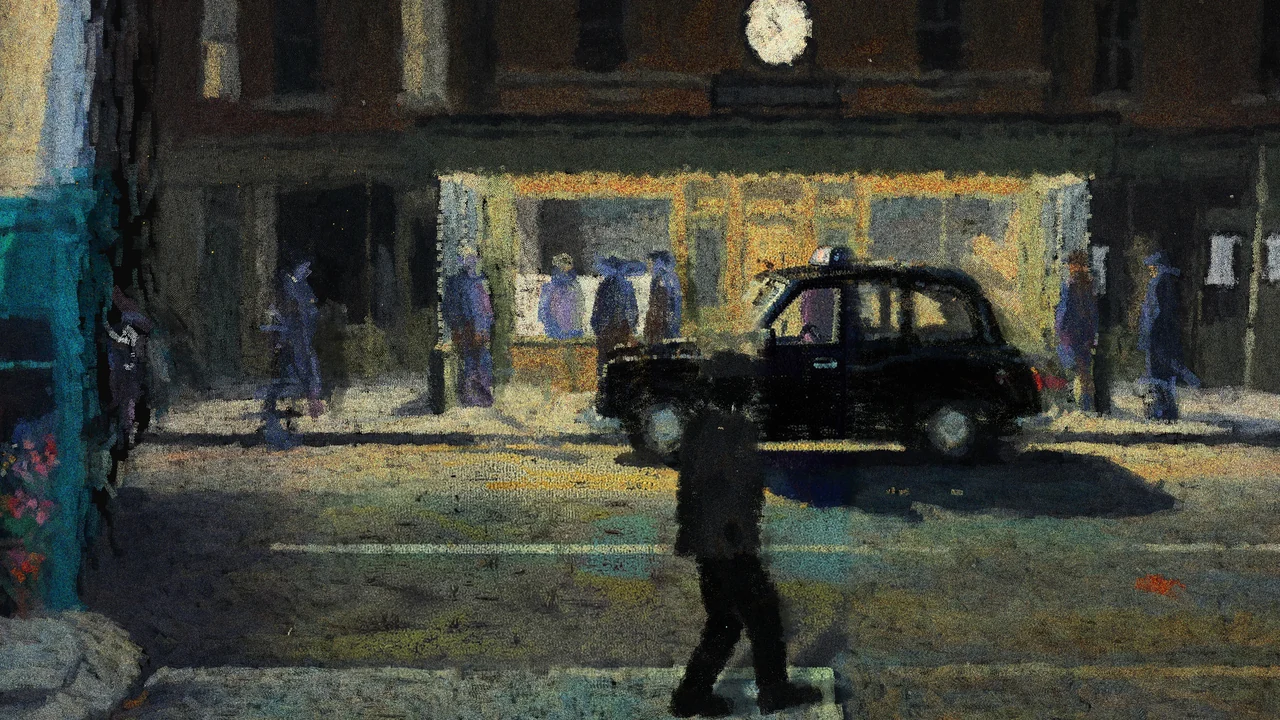
A taxi driver who lives at night. He watches the city through a side window, out of step with everyone who lives by day. Steady, solitary, observant. Resigned to repetition: another shift, another rank. Warmer than he looks.
He is the only one with no colour on his clothes: a flat cap, a dark jacket, hands in pockets, lit amber by the sodium streetlights. His nights are seen low from the road, the road across the whole width and the city a dark wall behind, wide, empty and tense. A rising night brings a passenger who talks and a dawn shared; a falling one, the empty road and the alarm at 9pm. The Night Worker appears in the days of the Newcomer, the Caretaker, the Performer, the Runaway and the Young One.
The Caretaker
Days 21–30, tableaus #231–240
Looking for reciprocity. The mood decides whether help arrives.
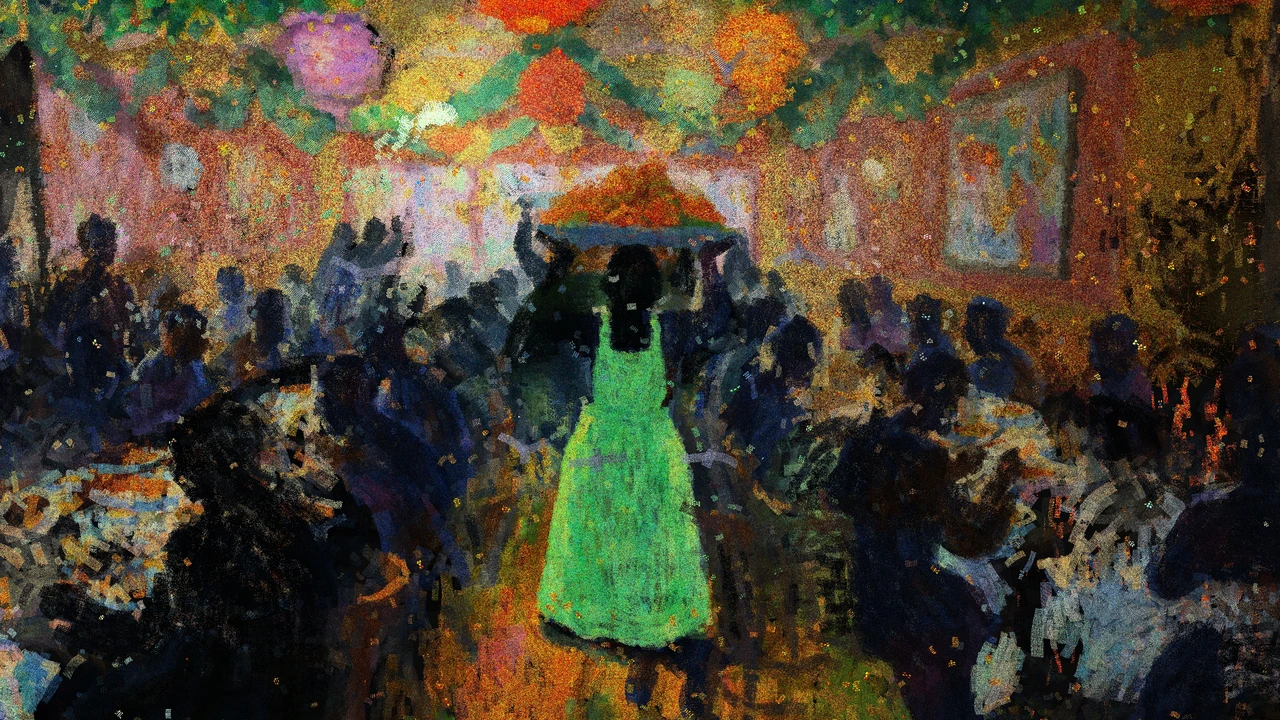
A sturdy woman of about fifty who runs a small diner and looks after an old parent upstairs. She gives without stopping and deflects every question about herself. Capable, tireless, proud. Refuses help. If she breaks, she breaks quietly, alone.
She wears a sage green apron with rolled sleeves over a dark dress, her hair pinned up. Her days are seen close, from inside the room, ceiling and floor both in view, heavy and warm. On a rising day someone does the dishes, sits next to her and says nothing; on a falling day the phone rings again and she is alone in a full house. The Caretaker appears in the days of the Newcomer, the Night Worker, the Performer, the Runaway and the Young One.
The Performer
Days 31–40, tableaus #241–250
Looking for authenticity. The mood decides whether the mask cracks.
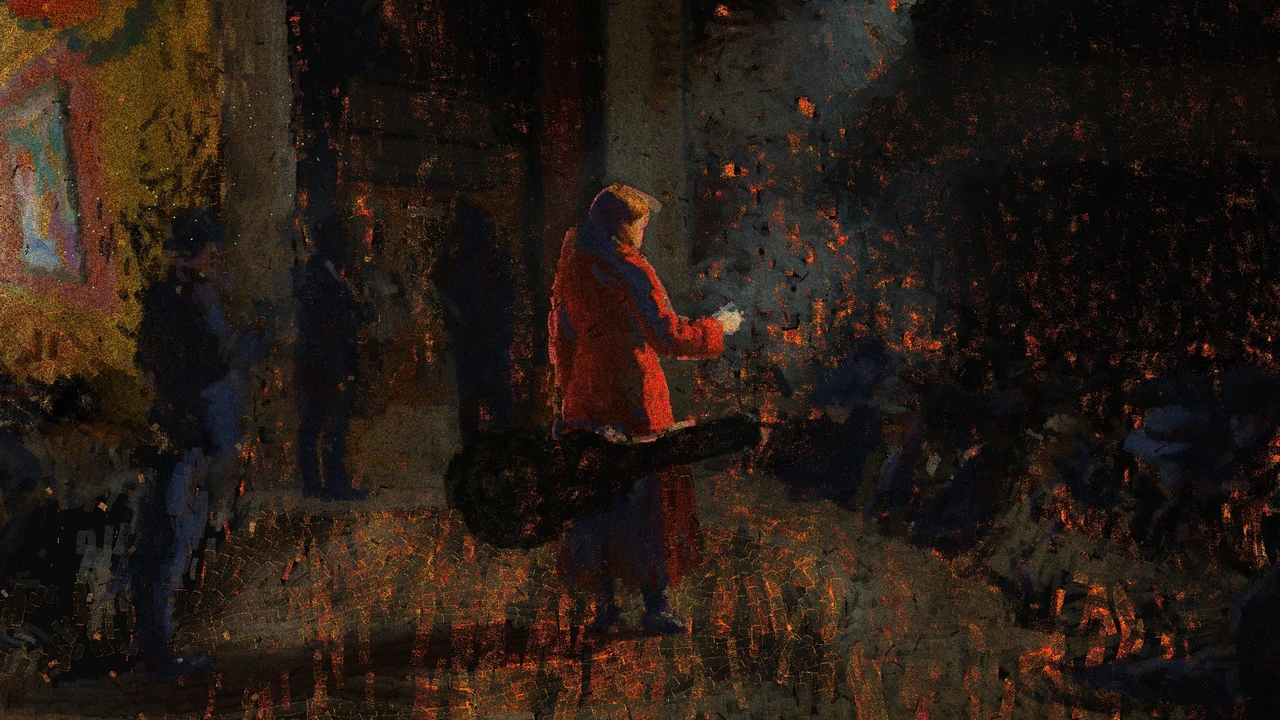
A singer, a slim woman of about thirty. Magnetic and practiced, she performs even in conversation. Triumphant, and tiny in front of an ocean of crowd. Wears a mask so long it starts to stick. Truest when nobody is watching.
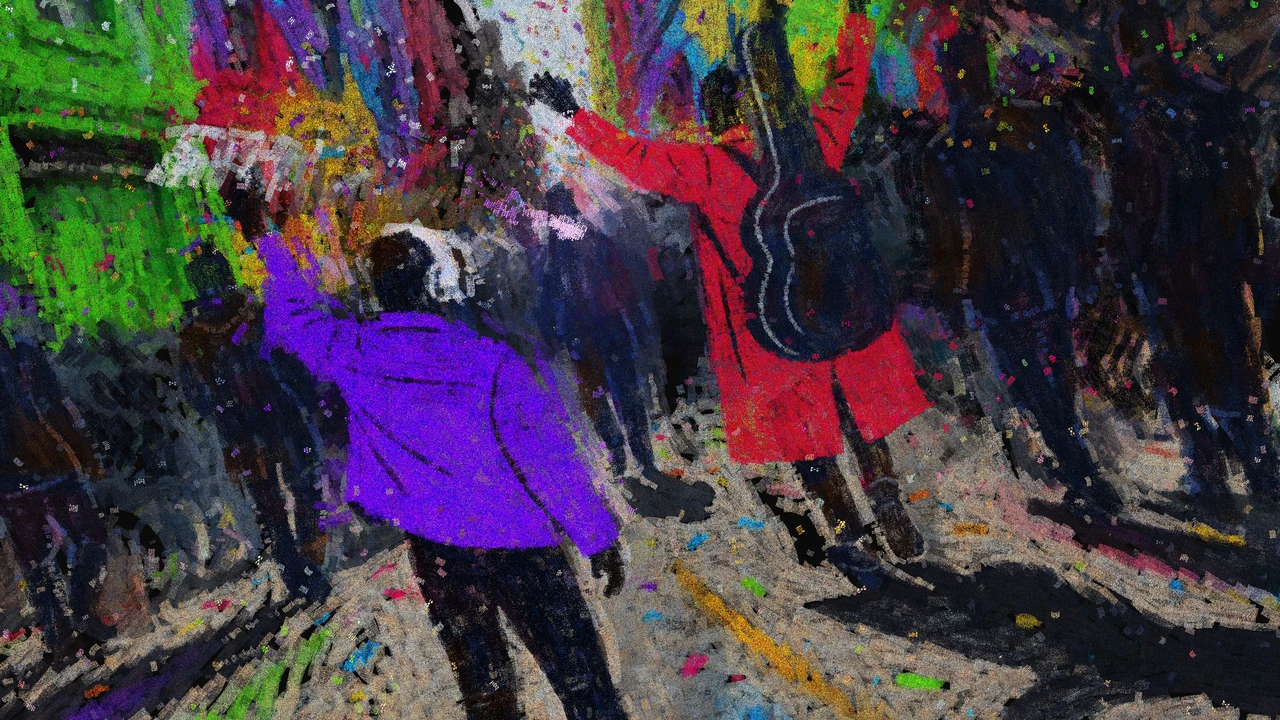
She wears a long crimson coat, a black guitar case on her back, her hair tied back. Her days are seen from the side of the hall, the stage edge across the picture, half lit and half in deep shadow. On a rising day someone really sees her, the mask comes off and they stay; on a falling day the applause sounds like static and the stage is empty. The Performer appears in the days of the Newcomer, the Night Worker, the Runaway and the Young One.
The Runaway
Days 41–50, tableaus #251–260
Looking for peace. The mood decides whether stillness holds.
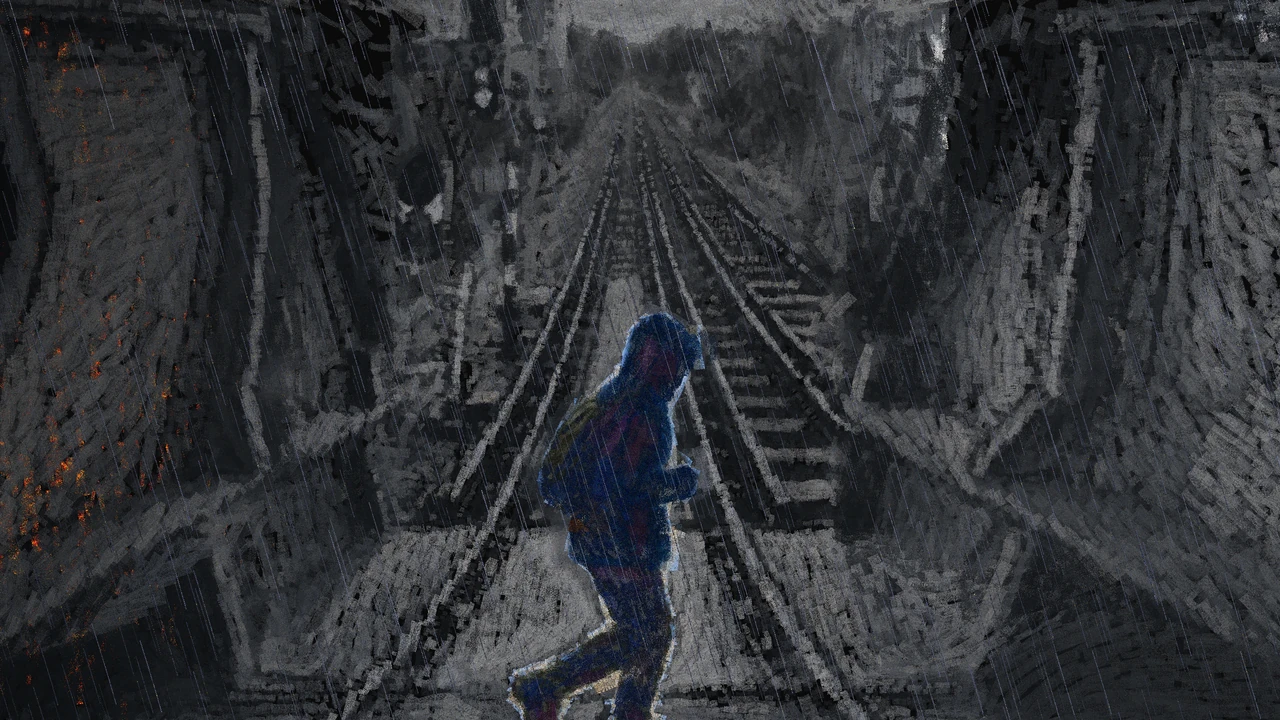
Someone who arrives in a hurry, looking back over their shoulder. What they are running from is never shown. Nobody meets them before their own ten days. Wary, fast, coiled. Never stops; head down through the rain. Stillness brings panic before it brings rest. Shelters in warm, temporary places: a laundromat.
They wear a dark blue hooded jacket, hood up, and a backpack; the hood is the only colour on them. Their days are close and tight, high walls on both sides, the passage running into depth and the sky a thin strip. On a rising day they stop and look up, and nobody followed; on a falling day there is a shadow behind them and the door stays locked. Nobody meets them before their own days. Later they appear in the days of the Young One.
The Young One
Days 51–59, tableaus #261–269
Looking for identity. The mood decides whether speed or paralysis wins.
A young skater, the last to lead. Nobody has seen him before his own days begin. Fast, raw, stubborn, persuasive. Sees the city as a playground. Can freeze completely while the city races.
He wears a violet jacket, big white headphones and white shoes, a skateboard under the near arm. His days lean, the horizon tilted about ten degrees and the ground rushing away below, fast and raw. On a rising day the city is his playground; on a falling day he stands still while it moves. Nobody meets him before his own days. In them, his path crosses each of the other five.